Two Sessions: China says it's open for business - do we buy it?
As China's annual parliamentary sitting came to a close after a hectic week of meetings, a glaring void loomed on Monday's final agenda.
The National People's Congress is usually capped off by the premier's press conference. But this year, and for the rest of the term, the tradition was mysteriously nixed.
Officials said there was no need for it given there were other opportunities for journalists to ask questions. But many observers saw it as another sign of consolidation and control, in what became a running theme for the congress, even as top officials preached openness.
The cancellation of the press conference - for the first time in 30 years - effectively diminishes Premier Li Qiang's profile. Though the event was scripted, it was a rare chance for foreign journalists to ask questions and gave the country's second-in-command some room to flex his muscles.
In years past, it even yielded some unexpected moments. In 2020 then-premier Li Keqiang disclosed figures that stoked debate over a government claim that it had eradicated poverty.
The dimming of the spotlight on the premier, along with a shorter congress this year, are all signs of ongoing structural change within the Chinese Communist Party (CCP) where President Xi Jinping is increasingly accumulating power at the expense of other individuals and institutions, noted Alfred Wu, an associate professor at the National University of Singapore who studies Chinese governance.
On Monday, congress delegates also passed a law that effectively tightens the party's control of the State Council, which is China's cabinet helmed by Mr Li.
But to the outside world, the party is keen on projecting a different kind of image as it battles dwindling foreign investor confidence and a general malaise in its economy.
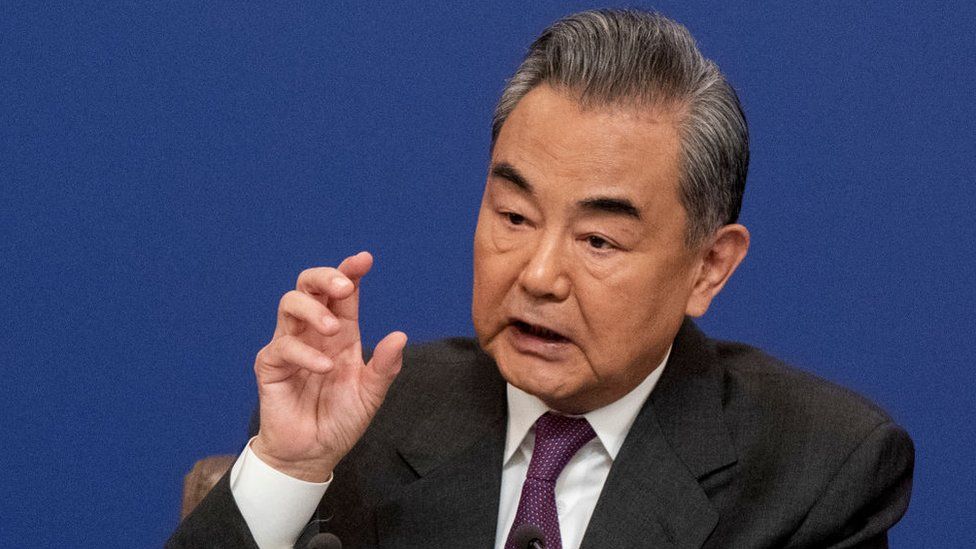
Addressing international journalists last week, foreign minister Wang Yi insisted China was still an attractive place to invest in and do business.
"China remains strong as an engine for growth. The 'next China' is still China," he said, before citing ways in which "China is opening its door wider".
This year's economic blueprint, delivered by Mr Li at the start of the session, laid out plans to open up more areas to foreign investment and reducing market access restrictions in sectors such as manufacturing and services.
These moves come after foreign investors were spooked by recent anti-espionage and data protection laws, as well as several sudden high-profile detentions of Chinese and foreign businessmen. Foreign direct investment in China recently fell to a 30-year low.
"There are fewer political checks and balances, there is no transparency. This is the bigger concern for investors… you cannot predict what's going to happen, so you avoid the risk," said Dr Wu.
IMAGE SOURCE,GETTY IMAGES
Image caption,
Chinese Foreign Minister Wang Yi declared China was "opening its doors wider"
But last week Mr Wang dismissed such concerns. "Spreading pessimistic views on China will end up harming oneself. Misjudging China will result in missed opportunities," he said, as he focused on talking up China's prospects.
Both Mr Wang and Mr Li repeatedly used buzzwords like "high quality development" and "new productive forces" to signal a new stage in China's development, though neither fully explained what they meant. China is aiming to hit an ambitious goal of around 5% GDP growth this year.
"Beijing is changing how it opens to the world," said Neil Thomas, a fellow in Chinese politics at the Asia Society Policy Institute.
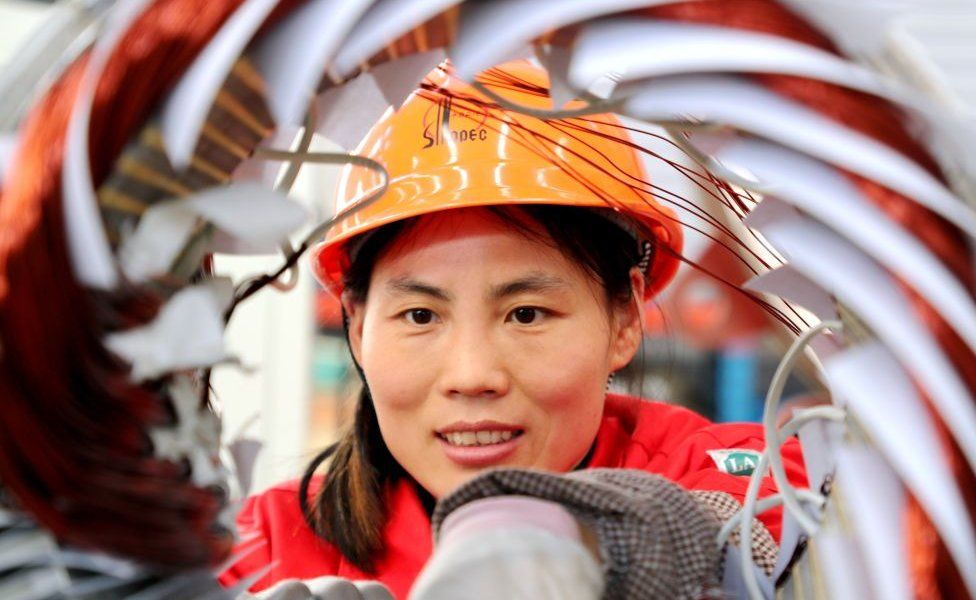
He said it is now focused on attracting high-end foreign technology and advanced manufacturing operations to help Chinese companies in key future industries.
"Foreign investment and trade are less important for China's economy than they once were, but Beijing still wants to avoid a rush to the exits that could further shake its growth prospects."
IMAGE SOURCE,GETTY IMAGES
Image caption,
China is focusing on boosting its high-end technology sector
At the same time, officials were keen to emphasise the government's ultimate goal.
"Stability is of overall importance, as it is the basis for everything we do," said Mr Li. Elsewhere in his report, he made it clear that while China pursues growth, it would also prioritise greater national security.
Some may question how successfully China can achieve a thriving open economy while increasing control.
But "from Beijing's perspective, there is no contradiction between high-quality development, especially with foreign investment, and greater security needs," said Jacob Gunter, lead analyst with Merics specialising in China's economy.
For instance, when it comes to critical technologies where Chinese firms have yet to catch up, it would want to ensure as much of it as possible is produced within its borders, pointed out Mr Gunter. This reduces the risk of rivals - such as the US and its allies - stealing the technology or blocking their exports to China.
Beijing also signalled it would continue to clamp down on problematic areas in its economy, such as the floundering real estate sector and ballooning local government debts.
Mr Li promised more measures to defuse financial risks and improve supervision, and pledged to crack down on illegal financial activities.
While these problems have existed for several years, "the debt levels and size of the property bubble have gotten big enough that they have to solve it now and can't back off", said Mr Gunter.
"The economy is performing really poorly right now. The fact that they haven't gone back to kicking this can down the road signals this is a longer term priority and not something they will back off on."
Electoral bonds: India bank ordered to disclose anonymous political donations India's Supreme Court has given a government-run bank one day to disclose details of a controversial scheme that allowed people and companies to make anonymous donations to political parties. The State Bank of India asked for more time but must share data with election officials by the end of Tuesday. It will also have to publish the details on its website by Friday. The court struck down the scheme last month, calling it "unconstitutional". The ruling comes days ahead of an expected announcement setting the dates for the general election and will be seen as a setback for Prime Minister Narendra Modi's Bharatiya Janata Party (BJP), which has been the largest beneficiary of the system. His government had launched the electoral bonds scheme in 2018, saying it would make political funding more transparent. But critics say it did the opposite instead and made the process more opaque. Donors ...
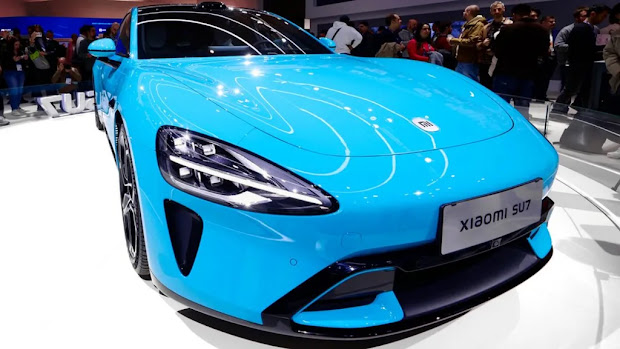
China technology giant Xiaomi starts electric car sales Chinese technology giant Xiaomi says it will start deliveries of its first electric vehicle (EV) this month - its first ever foray into the competitive automotive industry. The car's price is expected to be announced on 28 March. China's fifth-largest smartphone maker says it has 59 stores in 29 cities around the country to take orders. It comes as a price war intensifies between firms like BYD and Tesla in China, the world's biggest car market. At the unveiling of the Speed Ultra 7 (SU7) last year, Xiaomi's chief executive Lei Jun said the company aims to become one of the top five car makers in the world. The smartphone giant has said it will invest $10bn (£7.8bn) in its vehicles business over the next 10 years. Mr Lei said the SU7 was "super electric motor" technology which is capable of accelerating faster than some Tesla and Porsche EVs. Xiaomi is also hoping that the car's shared operating sys...



Comments
Post a Comment